


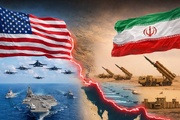
Washington and Tel Aviv formed a coalition to launch an unprovoked coordinated military attack against Iran on February 28, 2026, targeting leadership, nuclear, military, and civilian sites across the country. The aggression prompted immediate and sustained retaliatory strikes by the Iranian Armed Forces against the Israeli and American interests in the region. The war has resulted in 3,375 identified fatalities within Iran, with ordinary civilians being a significant number of them.
After weeks of hostilities, a fragile two-week truce was brokered by Pakistan and took effect on April 10, hailed by Tehran as an “Iranian victory” based on its 10-point peace framework. However, subsequent direct talks in Islamabad between the Iranian and American delegations, headed by U.S. Vice President JD Vance and Iranian Parliament Speaker Mohammad Bagher Ghalibaf, ended without reaching a peace deal on April 12 after 21 hours. Washington’s “excessive demands” regarding the Strait of Hormuz and Iran’s nuclear program were cited by the Iranian sources as the principal points of contention.
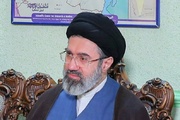
In order to shed more light on the dimensions of the war, Mehr News Agency reached out to Giulio Chinappi, an Italian political analyst and a researcher from the Center for Mediterranean Eurasia Studies (CeSEM).
Here is the full text of the interview:
There are documented reports of extensive attacks on residential areas and medical facilities by the US and Israel. In particular, the airstrike on the Shajareh Tayyebeh elementary school in Minab resulted in the deaths of over 160 people, primarily children. From an international law perspective, how should the international community and institutions like the ICC assess claims that such strikes are "errors" against the broader pattern of attacks on civilian objects, including numerous registered cultural heritage sites?
The Minab school strike should not be assessed as an isolated “error” in a vacuum. Even Western media have reported that U.S. military investigators believe it is likely that U.S. forces were responsible for the strike on the Shajareh Tayyebeh school in Minab, while the U.N. Independent International Fact-Finding Mission on the Islamic Republic of Iran said the attack was deeply shocking and that most of the victims appeared to be schoolgirls aged seven to twelve. Human Rights Watch has also treated the attack as part of a broader international armed conflict in which schools, health facilities, homes, and other civilian sites have been hit.
From an international law perspective, once such an incident sits within a wider pattern of attacks on civilian objects, the core legal questions become distinction, proportionality, feasible precautions, and command responsibility, not simply whether one strike can be labeled a mistake after the fact. The “error” argument does not end the inquiry; it triggers a deeper one into the targeting process, the intelligence used, the foreseeability of civilian harm, and whether senior civilian or military officials acted deliberately or recklessly. The same is true for attacks affecting cultural heritage: UNESCO has said four of Iran’s World Heritage Sites sustained damage during the war, and the Rome Statute treats intentional attacks on buildings dedicated to education, religion, art, science, or historic monuments as potential war crimes.
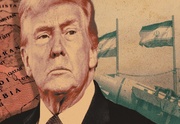
US President Donald Trump publicly threatened that "a whole civilization will die," and the Israeli-American military coalition has acknowledged a campaign targeting bridges, power plants, and railways. When a sitting U.S. official threatens the erasure of an ancient civilization and systematically dismantles the infrastructure essential for civilian survival, how does this rhetoric and action undermine the Geneva Conventions' prohibitions against collective punishment and attacks on objects indispensable to civilian life?
President Trump’s statement that “a whole civilization will die tonight,” together with his separate threats to destroy bridges and power plants, is not legally or politically neutral rhetoric. Human Rights Watch notes that statements by senior officials are not automatically war crimes in themselves, but they can be powerful evidence of criminal intent if corresponding unlawful attacks are then carried out; the same source also notes that officials may be prosecuted for ordering, soliciting, or inducing crimes when there is a sufficient link between their words and subsequent acts. Even some Western legal experts warned that Trump’s sweeping threats against bridges and power plants could amount to war crimes because such infrastructure is presumptively civilian unless it is being used for a concrete and direct military purpose. In that light, rhetoric about civilizational annihilation and the systematic dismantling of essential infrastructure directly corrodes the protective logic of the Geneva Conventions: it normalizes the punishment of an entire civilian population for a dispute between governments, and that is precisely the terrain in which the prohibition of collective punishment loses force in practice.
Following the collapse of negotiations, the U.S. president initiated a naval blockade plan for the Strait of Hormuz, an international waterway vital for global energy security. President Trump’s warning that any Iranian "will be blown to hell" if they resist has raised tensions. In your view, does this blockade constitute a lawful act of war or an act of economic aggression and collective punishment against the Iranian nation?
Under the U.N. Charter, blockade is a classic coercive measure associated with Chapter VII enforcement, that is, action ordinarily tied to Security Council authority. Separately, the San Remo Manual allows belligerent blockades in armed conflict only under strict conditions: they must be declared and notified, effective, impartial, must not bar access to neutral ports, and must not have the purpose or foreseeable effect of starving civilians or denying them objects essential for survival; they must also allow the passage of medical supplies and, where civilians are inadequately provided for, essential goods. The United States Central Command (CENTCOM) says the present U.S. blockade is directed at Iranian ports and does not impede neutral transit through the Strait of Hormuz; however, even US allies such as the British government refused to support it absent a “clear lawful basis,” while Trump publicly threatened that any Iranian who fired at U.S. forces or peaceful vessels would be “blown to hell.” In my view, given the absence of a Security Council mandate, the deeply contested self-defense narrative surrounding the war, and the openly coercive purpose of increasing pressure after failed talks, this blockade is better understood as coercive economic warfare and a grave form of collective pressure on the Iranian nation than as a cleanly lawful enforcement action.
The 21-hour talks in Islamabad collapsed when the U.S. delegation, as announced by Iranian officials, presented "excessive" demands. Given the principle of sovereign equality among nations, how does the international community view such negotiation tactics? Is this a genuine search for peace or a premeditated effort to force capitulation and provide a pretext for further military action?
The Islamabad talks illustrate the tension between diplomacy and diktat. The talks were the highest-level U.S.-Iran discussions since 1979, but they collapsed, after which Washington moved straight to a blockade. According to reports, one of the major sticking points was a U.S. proposal for a long moratorium on enrichment, reportedly as long as 20 years, together with the removal of Iran’s existing enriched material. In abstract terms, hard bargaining is normal in diplomacy. But when such demands are presented in the context of ongoing military pressure, public threats against civilian infrastructure, and immediate resort to a blockade after negotiations fail, they cease to look like ordinary reciprocal bargaining and begin to resemble terms of capitulation. Under the principle of sovereign equality, negotiations should aim at a mutually acceptable settlement, not the unilateral hollowing out of one state’s lawful sovereign capacity. For that reason, much of the international community, especially across the Global South, is likely to read the collapse of the Islamabad process less as proof that diplomacy was exhausted than as evidence that diplomacy was subordinated to coercion.
In my view, the sequence of events strongly suggests premeditation rather than a sincere search for peace. When maximalist demands are advanced in a context already shaped by military pressure, public threats, and the rapid preparation of coercive measures in case of failure, negotiations risk becoming less a channel for compromise than a tactical instrument designed to force capitulation. This deserves clear condemnation, because diplomacy conducted in such a manner ceases to be a good-faith effort to prevent war and instead becomes part of the escalation itself, furnishing a political and rhetorical pretext for further military action.
Iran has been forced to defend itself while simultaneously being challenged by Western-led diplomatic actions. What message does the world's response—or lack thereof—to the destruction of schools, hospitals, and bridges in Iran send to other nations in the Global South regarding the reliability of international law as a shield against the military might of permanent UN Security Council members?
The broader message to the Global South is extremely damaging. The U.N. fact-finding mission said the initial attacks ran counter to the U.N. Charter. Human Rights Watch and UNESCO-linked reporting then documented a pattern that includes a mass-casualty school strike in Minab, strikes on civilian infrastructure, and damage to multiple World Heritage Sites. Yet accountability remains uncertain because the ICC does not have automatic jurisdiction here, as the United States, Israel, Iran, and Lebanon are not parties to the Rome Statute, so ICC jurisdiction would require either a Security Council referral or a formal acceptance of jurisdiction by a non-party state. The resulting lesson is bleak but obvious: international law remains universal in its language, but often selective in its enforcement when major military powers or their close allies are involved. That does not make international law meaningless, but it does tell many states in the Global South that legal principle alone is not yet a reliable shield against the military attacks of an imperialist major power or its allies.
Interview by Mohaddeseh Pakravan






Your Comment